—DOCUMENTED PROGRAM HISTORY - SIX CASE STUDIES
EVERY WELD
PASSED.
EVERY TIME.
Six programs. Six impossible-to-weld challenges. Six zero-defect outcomes — independently verified by radiographic and penetrant testing. The methodology behind every result now lives in the TRON E-Series.

-CONSOLIDATED PERFORMANCE RECORD-
THE NUMBERS
BEFORE THE STORIES.
These are not internal benchmarks or marketing claims. They are the independently verified outcomes across every documented Spacetron program engagement — the aggregate record of what zero contamination actually produces.
100%
Grade A RT & PT pass rate
100% Grade A clarity on Radiographic Testing and zero indications on Fluorescent Penetrant Testing across all six documented programs. Not a single weld required re-work or rejection.
ZERO
Defects across all programs
Zero porosity. Zero inclusions. Zero surface cracks. Zero post-weld warping requiring correction. Across thin-walled titanium foils, massive structural beams, and complex multi-material assemblies.
±0.001"
Tightest geometric tolerance achieved
Flatness variance held to ±0.001" on a 22-inch OD, 0.030" wall vessel — a near-impossible tolerance on a structure of that diameter undergoing full circumferential thermal expansion.
90
Days — design to flight certification
A 20-foot custom vacuum chamber designed, manufactured, and certified to Rockwell International MA0107-328 N/C processing procedures in exactly 90 days. Zero program delays.
40+
Years — perfectly silver, zero corrosion
Spacetron samples from 1984 — welded inside a zero-contamination argon atmosphere — remain perfectly silver with zero defects, zero cracking, and zero corrosion after more than four decades.
3×
Hardware longevity extension
Components welded and cooled within a Spacetron total immersion environment consistently demonstrate 3× or greater lifecycle performance versus standard-environment equivalents. A conservative estimate.
Full fabrication thickness range mastered — without defect
From satellite diaphragm bellows at 0.003" to the K-1 Rocket's structural titanium at 1.000" — Spacetron has fused the full spectrum of reactive metal thicknesses without a single defect. This range is not theoretical. Every thickness point was independently verified by NDT on an active program.
THE METHODOLOGY BEHIND EVERY RESULT IN THIS PAGE
EVERY ZERO-CONTAMINATION OUTCOME WAS ACHIEVED INSIDE A CLOSED-ATMOSPHERE SPACETRON ENVIRONMENT
That environment is now commercially available in the TRON E-Series Argon Weldstation — achieving 99.999% argon purity in under 5 minutes.

1984 -PROPULSION STRUCTURE- ROCKWELL INTERNATIONAL
SPACE SHUTTLE
ENDEAVOUR —
AFT THRUST
STRUCTURE.
THE CHALLENGE
Rockwell International needed a fully certified, automated GTAW system and vacuum chamber for the titanium Aft Thrust Structure — the propulsion component that carries the Shuttle's main engines. No existing vacuum chamber was large enough, and the titanium beam would physically expand during welding, requiring a modular architecture that could accommodate that growth. The entire system had to be designed, manufactured, and certified without delaying the Shuttle's production schedule. Timeline: 90 days.
The TRON Connection
The 20-foot custom vacuum chamber built for Endeavour's Aft Thrust Structure was a one-of-a-kind engineering feat — designed, fabricated, and certified from scratch in 90 days. The TRON E-Series commercializes that exact methodology at production scale, delivering the same verified zero-oxygen environment in a system available off the shelf, in under five minutes of purge time, for any program that demands it.
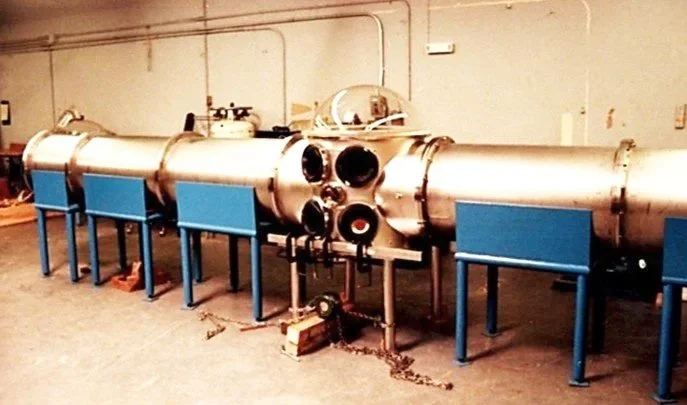
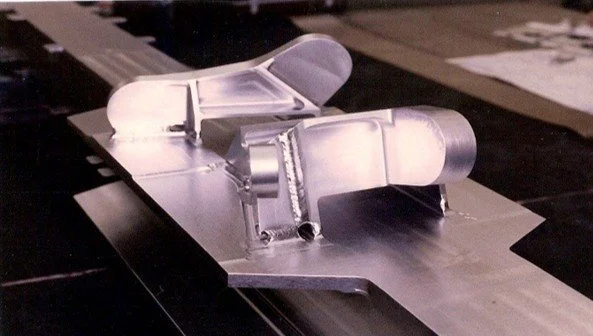
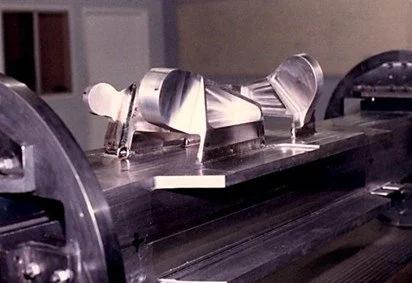
✓Custom 20-foot modular vacuum chamber designed and manufactured from electropolished 304L stainless steel
✓Vacuum pumping system achieving 10⁻⁶ rate across full chamber volume
✓Full Rockwell International MA0107-328 N/C certification achieved in exactly 90 days
✓Zero program delays — Shuttle production schedule fully maintained
VERIFIED OUTCOMES
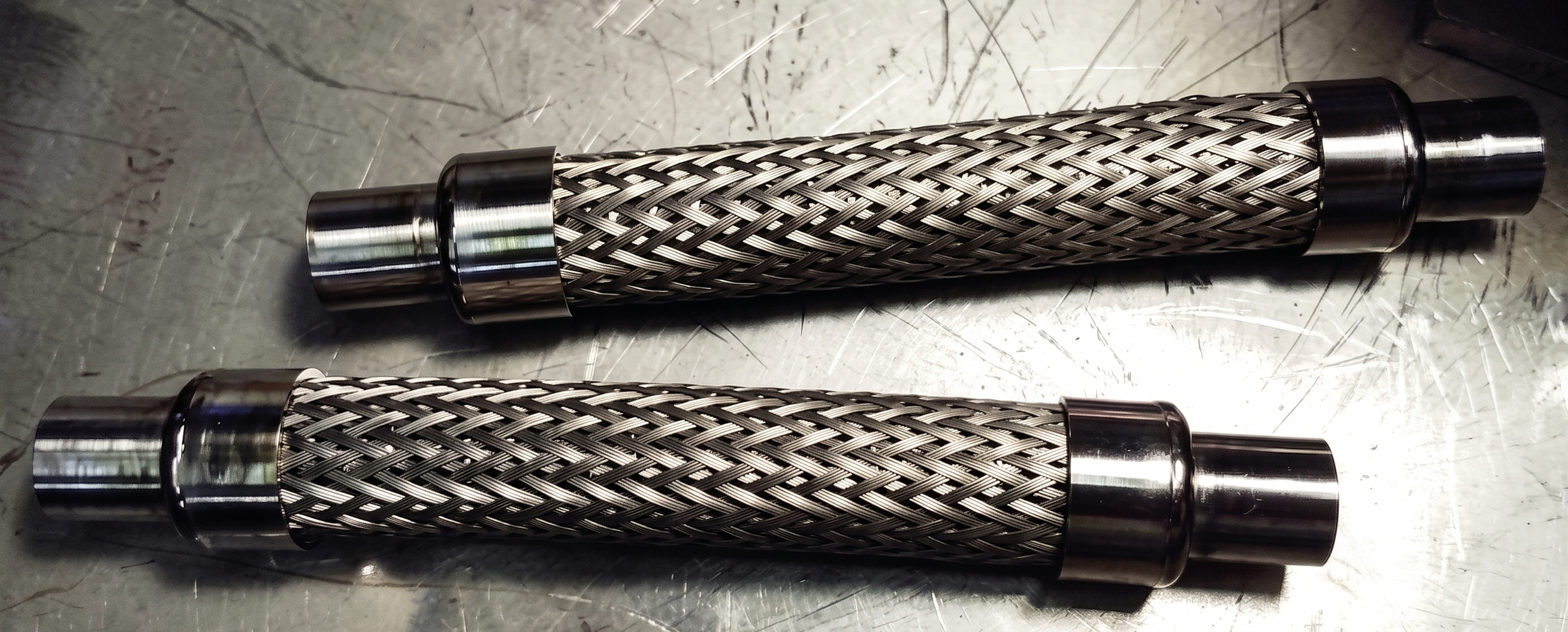
✓Verified zero-oxygen environment via custom Spacetron chamber prior to each arc strike
✓Multi-stage fusion sequencing across extreme material thickness variations without oxidation
✓Proof of concept delivered for the Orion Crew Module flexline assemblies program
✓Data and techniques adopted for continued design and testing on the full CM program
VERIFIED OUTCOMES
2016 -HUMAN-RATED PROPULSION- LOCKHEED MARTIN
LOCKHEED MARTIN
ORION — TITANIUM
HYDRAZINE &
HELIUM FLEXLINES.
THE CHALLENGE
The Orion Crew Module required titanium propellant and pressurization flexlines — the lines that carry hydrazine fuel and helium pressurant at the core of deep-space human propulsion. The design fused multiple titanium variants including Grade 9 seamless tube, 6AL4V machined fittings, and 0.0150" fine wire overbraid — extreme material complexity across a single assembly. Any atmospheric contamination during welding would cause immediate embrittlement, disqualifying the component for flight use. Standard localized purge methods were deemed unacceptable for geometries of this complexity.
The TRON Connection
Fusing flexible, high-pressure titanium joints across multiple material thicknesses demanded a verified zero-oxygen environment before the first arc strike — exactly what the TRON E-Series delivers as a standard, repeatable capability. What required a custom-engineered solution for the Orion program in 2016 is now available to any propulsion or fluid-systems team in under five minutes of purge time.
1998- STRUCTURAL · LAUNCH VEHICLE- NORTHROP GRUMMAN
K-1 ROCKET —
TITANIUM THRUST
BEAM. 25
GEOMETRIES.
THE CHALLENGE
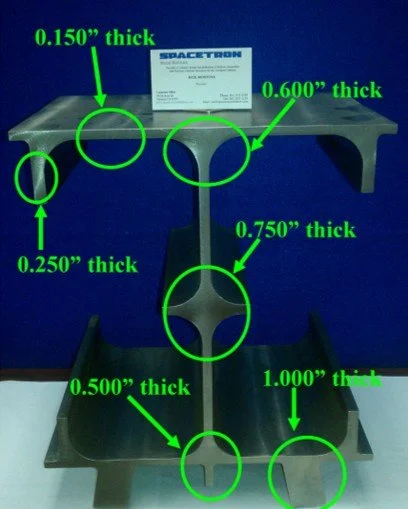
The K-1 Rocket thrust beam — the structural component that transmits propulsion forces through the vehicle — required heavy manual GTAW across a single assembly with 25 distinct shapes and thickness variations ranging from 0.150" to 1.000". Managing consistent heat input across that range without warping the titanium out of tolerance was a fabrication challenge that no standard welding environment could address. Every geometry required strict straightness and flatness compliance, and all welds were subject to X-ray, ultrasonic, and penetrant testing.
The TRON Connection
Three custom vacuum chambers were required to accommodate 25 distinct geometries across a single thrust beam assembly — a level of fabrication complexity that demanded purpose-built infrastructure in 1998. The TRON E-Series eliminates that barrier entirely, delivering the same verified zero-oxygen environment across any geometry within a single, repeatable production system.
VERIFIED OUTCOMES
✓Three custom vacuum chambers engineered to accommodate all 25 geometric variations
✓Dedicated on-site X-ray department installed for immediate quality feedback during fabrication
✓100% success rate — every weld passed X-ray, ultrasonic, and penetrant testing
✓All straightness and flatness requirements met across the entire assembly
VERIFIED OUTCOMES
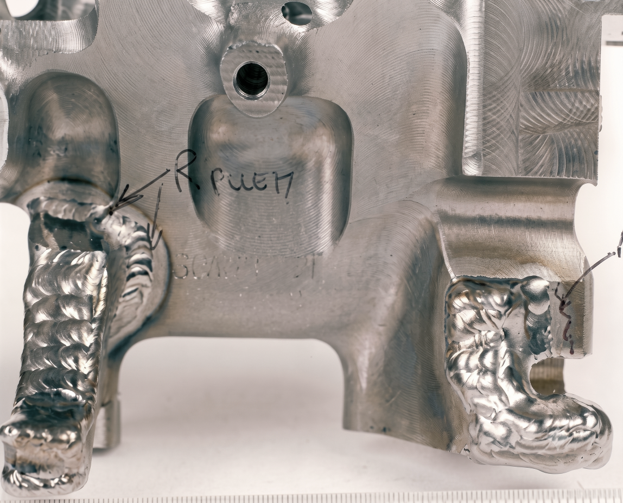
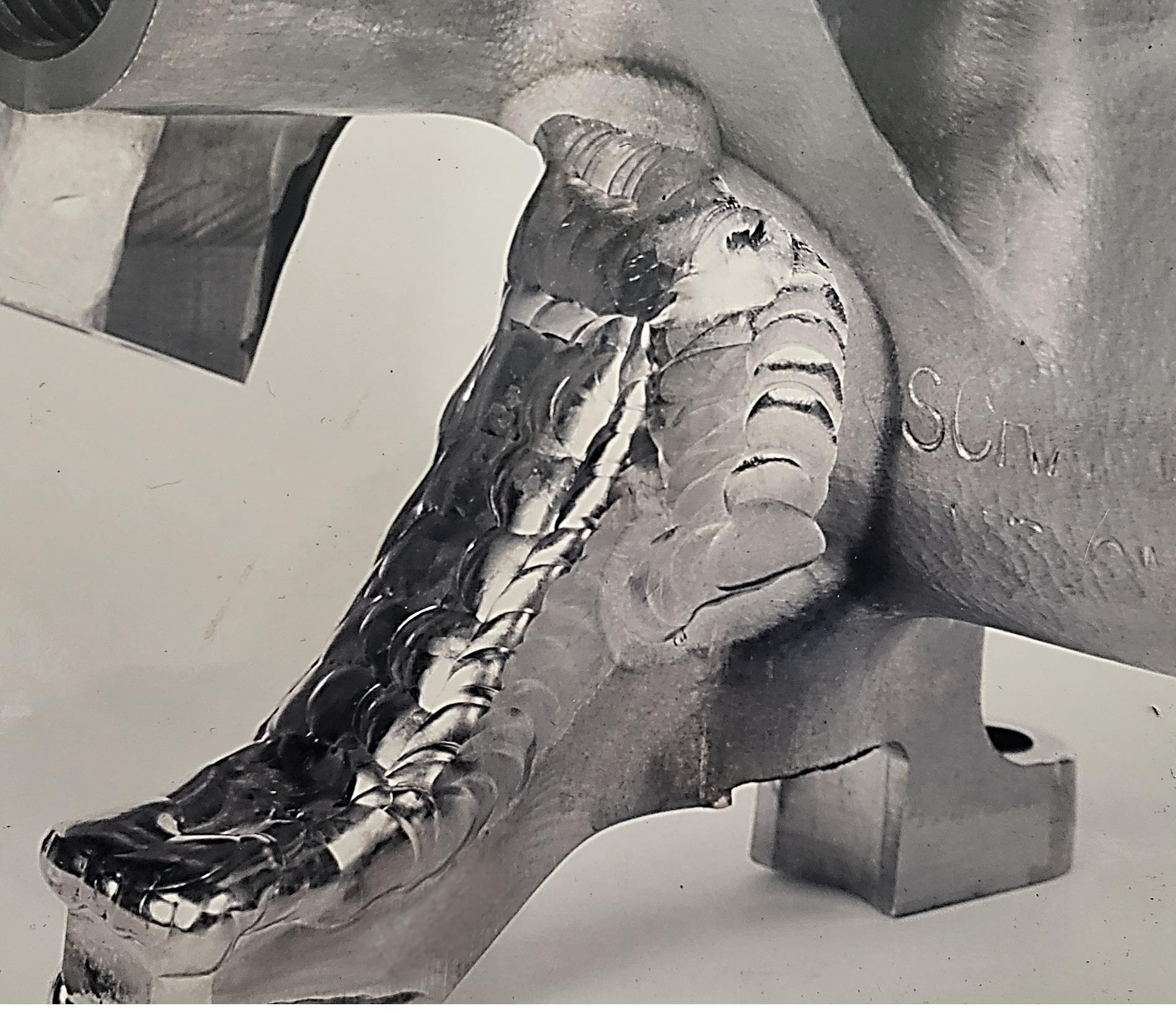
✓Standard welding approach abandoned in favor of controlled chamber immersion and proprietary weld sculpting
✓Two "ears" gradually sculpted via precision weld build-up to neutralize thermal stress
✓All severe cracking prevented — zero cracking events across all assemblies
✓100% RT and PT inspection compliance achieved on hypersonic flight hardware
2001- HYPERSONIC RESEARCH- NASA
NASA HYPER-X —
250 HAYNES
RUDDER.
WELD SCULPTING.
THE CHALLENGE
The Hyper-X hypersonic vehicle rudder assembly required joining a 5" × 4" block directly to a 2" thick 250 Haynes surface plate — an exotic nickel superalloy notoriously susceptible to severe cracking under rapid cooling. In a standard welding environment, the mass of the 2" plate creates a heat sink that pulls thermal energy from the joint faster than it can be managed, invariably causing catastrophic cracking in the alloy. All resulting welds were required to pass both Radiographic and Penetrant Testing for hypersonic flight hardware certification.
The TRON Connection
Preventing catastrophic cracking in an exotic alloy under extreme heat-sink conditions required abandoning standard welding practice entirely in favor of a controlled, closed-atmosphere approach — proprietary weld sculpting developed specifically for this challenge. The TRON E-Series makes that same atmospheric control a standard feature, not a custom solution engineered under pressure.
TACTICAL- TACTICAL AVIATION- DEFENSE PROGRAM
TACTICAL AVIATION —
TITANIUM RUDDER
ASSEMBLIES.
0.030" WALL.
THE CHALLENGE
Tactical aircraft rudder assemblies demanded 6AL4V titanium at a wall thickness of just 0.030" — at this dimension, the heat of a standard GTAW torch causes immediate warping and buckling of the material. Standard shielding methods failed to protect the weld root from atmospheric contamination, producing embrittlement and porosity that failed Radiographic Testing. The assemblies also demanded absolute flatness and straightness tolerances that conventional jigging could not sustain under thermal expansion.
The TRON Connection
Titanium rudder assemblies for tactical aviation demand the same zero-contamination standard as any human-rated flight hardware — the margin for error in a structural flight control surface is no different than in a propulsion system. The TRON E-Series brings that verified atmospheric control to any aviation fabrication program, regardless of program size or production volume.
✓Closed-atmosphere GTAW applied to flight-control-critical titanium rudder assemblies
✓Full traceability documentation maintained across every assembly produced
✓100% RT and PT pass rate across all delivered assemblies
✓Zero in-service failures reported across the program's operational history
VERIFIED OUTCOMES
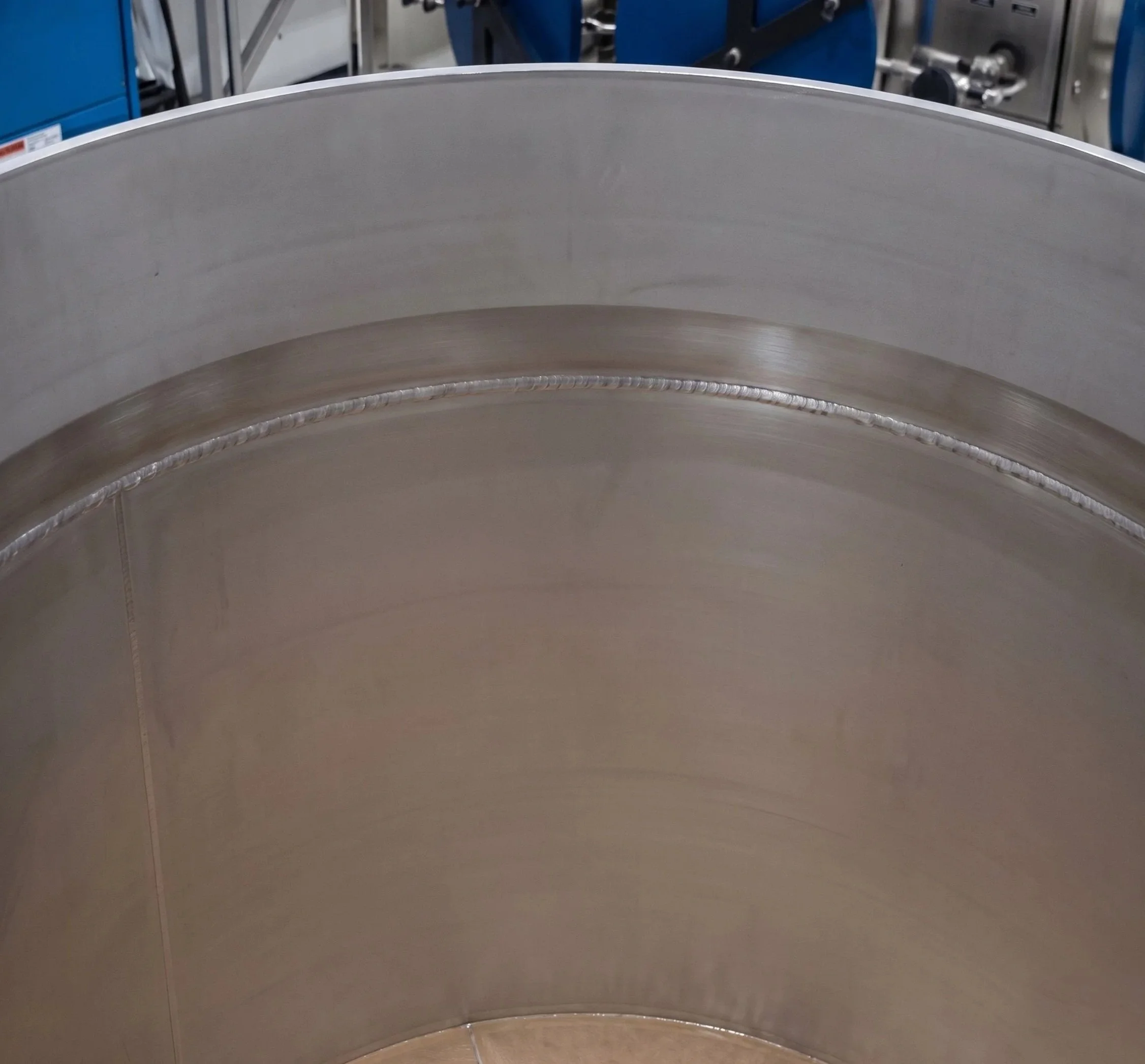
✓±0.001" flatness variance achieved on a 22-inch OD, 0.030" wall vessel
✓Large-format automated GTAW sequencing controlled across the full circumferential weld
✓Zero distortion from full circumferential thermal expansion during fabrication
✓100% RT and PT compliance on the completed pressure vessel
VERIFIED OUTCOMES
LARGE FORMAT- PRESSURE VESSELS- AEROSPACE PROGRAM
321 CRES TANK
LINER — 22" OD.
AUTOMATED GTAW.
±0.001".
THE CHALLENGE
A large-format 321 CRES corrosion-resistant steel liner mockup with a 22-inch outer diameter and 0.030" wall thickness — the circumferential weld joining the liner to the dome structure introduced extreme warping and buckling under manual welding conditions. Standard localized shielding produced weld porosity that severely exceeded allowable radiographic limits. The assembly required an absolute geometric tolerance of ±0.001" flatness between the dome and liner — an extraordinarily demanding specification for a structure of this diameter undergoing full thermal expansion during welding.
The TRON Connection
Achieving ±0.001" flatness on a 22-inch OD, thin-wall vessel under large-format automated GTAW required precise atmospheric and thermal control across the full circumference of the weld. The TRON E-Series scales that same precision control to production environments, making near-impossible tolerances a repeatable standard rather than an exceptional outcome.
-THE ENVIRONMENT BEHIND EVERY RESULT ON THIS PAGE-
SIX PROGRAMS.
ONE CONSTANT.
NOW YOURS.
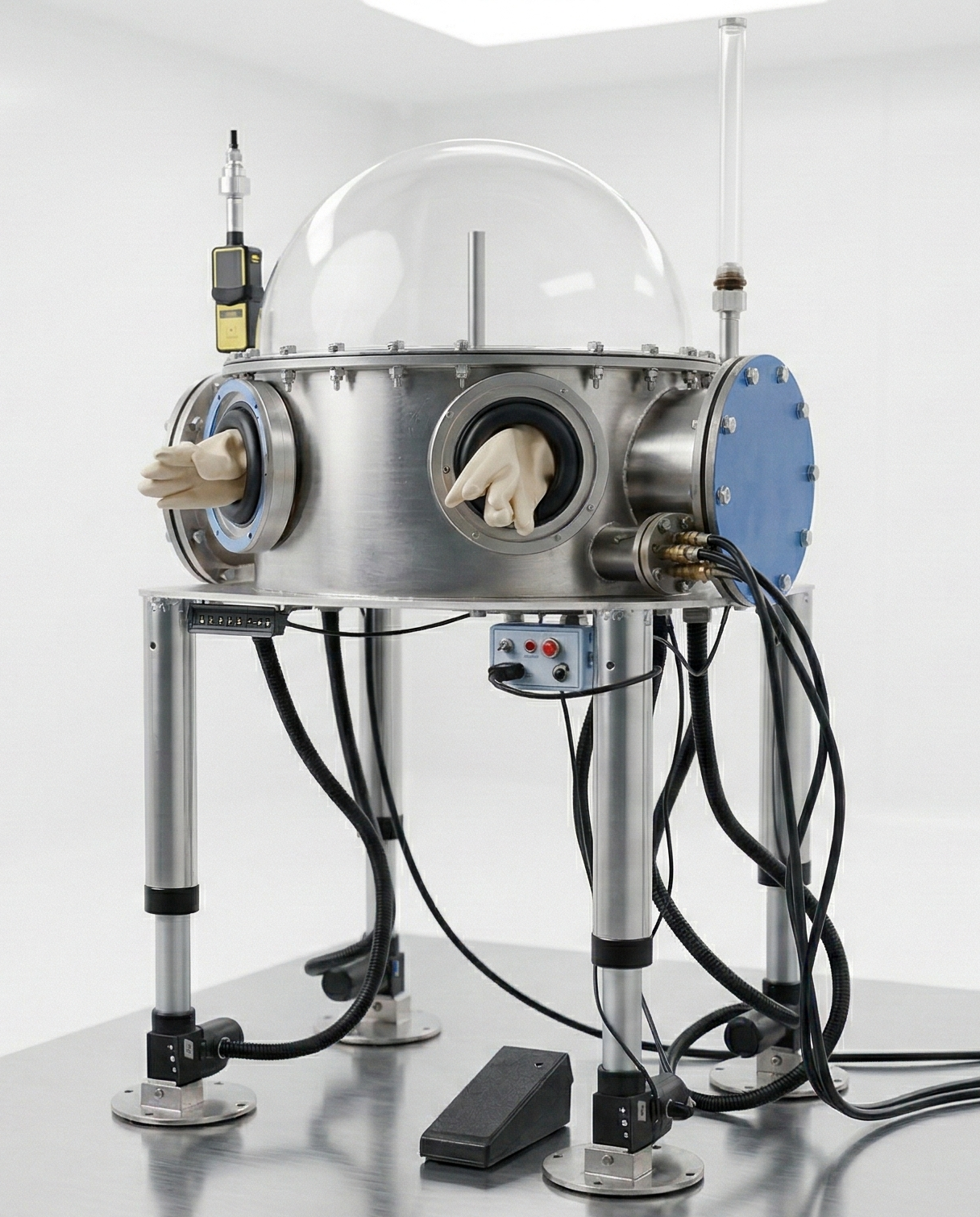
Every zero-defect outcome documented on this page was achieved inside a Spacetron closed-atmosphere environment — a verified argon atmosphere that eliminates the contamination, embrittlement, and thermal instability that cause standard-environment welds to fail.
That environment is now commercially available in the TRON E-Series Argon Weldstation. Five models from 18" diameter to 10-foot span. Achieving 99.999% argon purity in under five minutes. Architected for autonomous GTAW integration. Built on 48 years of flight-proven heritage — and the same methodology that qualified hardware for the Space Shuttle, the Orion Crew Module, and the K-1 Rocket.
99.999%
Verified argon purity
<5 MIN
To zero-oxygen environment
5 MODELS
E-18 through E-120
AGTAW
Autonomous-ready architecture
THE PROOF IS IN THE RECORD
YOUR PROGRAM
DESERVES THE
SAME STANDARD.
Every challenge on this page was solved with the same tool — a verified zero-contamination atmosphere. Whether you need that environment on your production floor or the expertise to qualify your process within it, Spacetron has both.